Pais is a personal AI agent orchestrator that converts any input - voice, images, text, documents - into structured calendar events and tasks, coordinating across every dimension of your life.
Enterprise AI orchestrates work. Consumer AI answers questions. Neither coordinates the whole of a person's life - until now.
Today's tools fragment your life across dozens of apps. Your calendar, tasks, notes, and goals live in silos. Consumer AI assistants can answer questions but don't connect inputs to action. Open-source orchestrators require engineering expertise and create security exposure. No one is building for the personal tier.
Pais is the orchestration layer for individual lives. It accepts any input, extracts structured intent, and coordinates across all categories of a person's world - not just their work calendar. Built on a Human-Centered AI framework derived from a federal HHS behavioral model, Pais treats time as the organizing resource for human flourishing.
Personal AI orchestration for the agentic era. Pais is a subscription-based web service, currently in private beta.
Pais accepts whatever format is most natural in the moment - a photo of a flyer, a voice note, a document, a conversation - and converts it into structured calendar events and tasks without manual data entry.
Powered by a two-stage Gemini pipeline, Pais performs fast intent classification followed by deep extraction, handling complex, ambiguous, and multi-event inputs gracefully.
Phase 2 introduces the Dynamic Activity Queue - an intelligent, continuously reordered view of everything a user needs to do, coordinated across all eight categories of life, not just work.
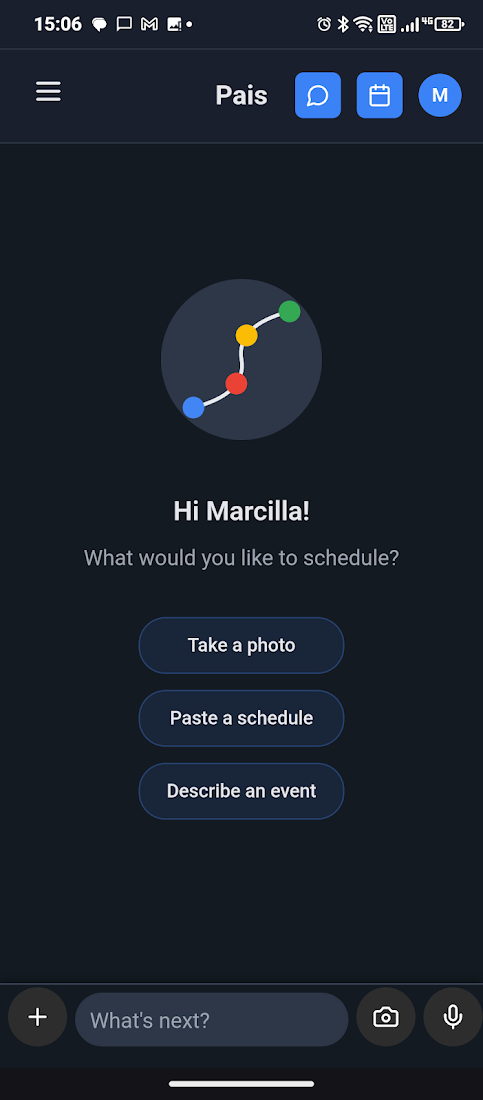
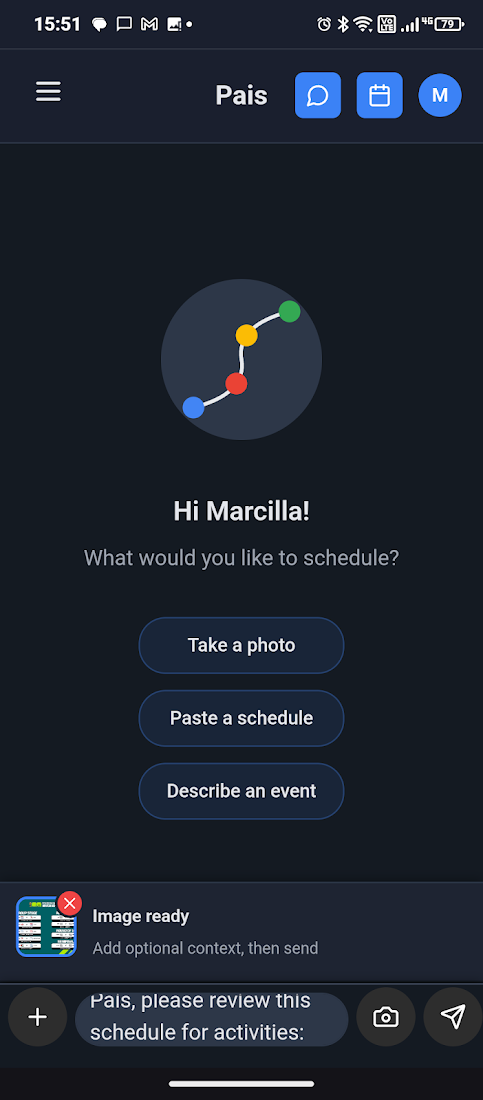
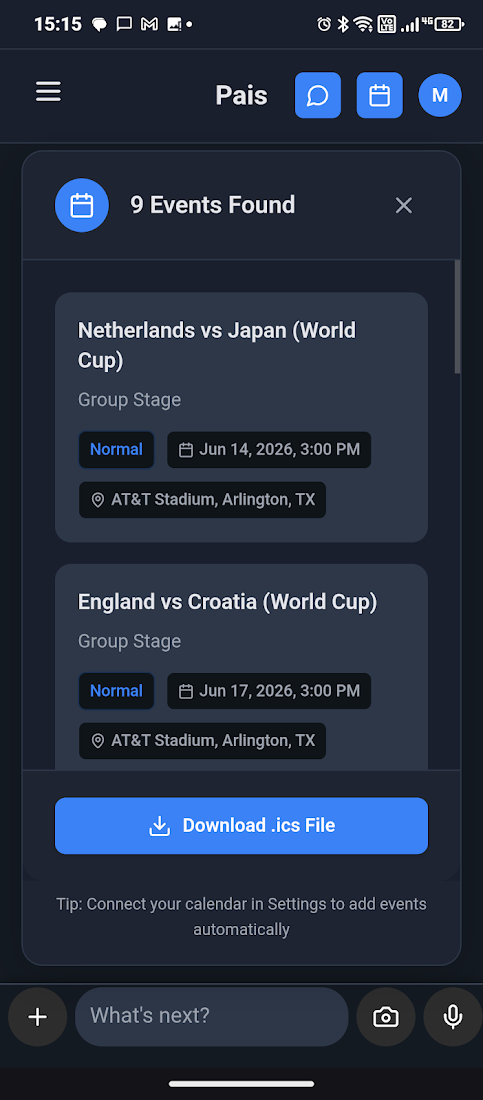
These are screenshots of the current Phase 1 release, available to invited beta testers.
The main interface, ready to accept any input.
Pais processes all inputs and reasons about what they contain.
A structured event, ready to add to your calendar with one tap.
Redemption Labs combines technology and behavioral science in a way that can't be manufactured internally by a large platform company.
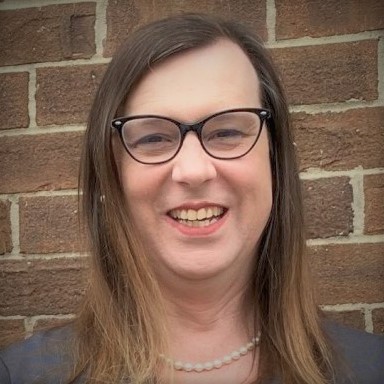
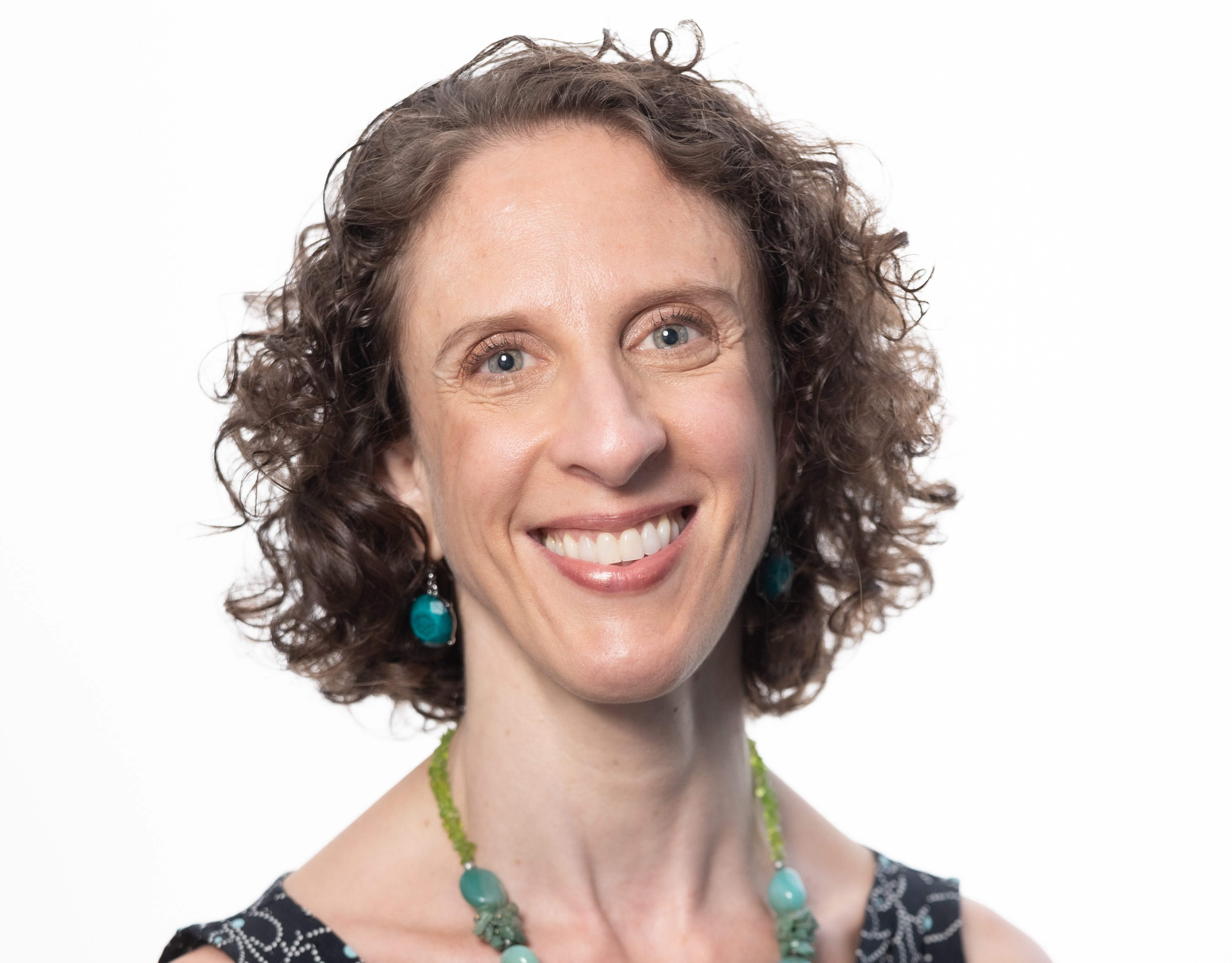
Marcilla wrote her first software application while still in elementary school because the video game she wanted to play wasn't ported to her system. That same spirit drove her to envision and eventually develop Pais in response to "everything" apps built on extraction models, rather than built to nourish human flourishing.
Her background includes not only technology operations, but also a lived experience of recovery which she transferred to a career in human services as an award-winning peer support specialist. With her understanding of finding balance in a life well-lived and her desire for an alternative to the toxicity in current superapps, she achieved certification in SQL, Python, cybersecurity, and AI before beginning work on Pais. As a result, Pais is the personal digital assistant conceived and built from the ground up to be human-centered.
Jerry is the engineer who took a working prototype and fundamentally redesigned it into a production-ready system. He rebuilt the two-stage Gemini pipeline, rearchitected the Firebase infrastructure, and overhauled the event extraction system that powers Phase 1 - bringing the kind of disciplined engineering judgment that turns "it mostly works" into something you can actually ship.
His PhD in neuropsychology and 17 years in medical device R&D at Electrical Geodesics, Inc. aren't background details. The cognitive science that shaped his research career directly informs how Pais reasons about time, priority, and coordination across the different domains of a person's life.
Aziz recently retired from the Washington Small Business Development Center at Washington State University where he spent a decade as a certified business advisor guiding founders in the Pacific Northwest through the hardest part of building a company: the gap between promising idea and something investors will actually fund. Before that, he spent 35 years in high-tech — engineering roles at Western Digital, director-level sales and product planning, and three startups of his own. He knows what it takes from both sides of the table.
He has been instrumental in the development of Pais since the concept stage, including opening doors and recruiting beta testers. His ties to the Pacific Northwest university and startup ecosystems give Redemption Labs a community presence that no pitch deck can manufacture.
Stephanie has spent more than thirteen years as a Licensed Clinical Social Worker helping people navigate the complex intersection of mental health and life transitions. Before her current integrated care practice in Raleigh, she worked with homeless populations, domestic violence survivors, and patients in medical and community mental health settings. She is trained in DBT, CBT, ACT, and IFS. Stephanie brings a clinical range most practitioners never develop.
Stephanie brings to Redemption Labs a perspective many tech companies have actively ignored: a clinician's understanding of what whole-life support looks like in practice. The 8-Domain Whole Life Framework at the heart of Pais was shaped by the same clinical tradition she works in every day, and her feedback on how the product affects people is grounded in her work guiding clients through life's complications.
We're currently in private beta and actively seeking feedback, partnerships, and conversations with people who care about how AI serves individual lives.
marcilla@redemptionlabs.io